
A quick disclaimer: although I studied sociology, I usually work with sources in the paradigm of social psychology. So, if something feels off, don’t be too harsh—just point it out and I’ll keep it in mind for the future.
To start, let’s look at how the audience of video games has changed over the last 25 years—and why I deliberately avoid the word “computer” here. Next, we’ll explore shifting preferences, cultural and social impact, regional differences, the role of economics in gaming behavior, and even a bit of futurology.
25 Years of Change
Number of Players
Over the past quarter century, video games have become one of the most widespread and accessible forms of entertainment. The global number of players grew from about 200–500 million in 2000 to 3.3–3.42 billion by 2024 (I give ranges because different sources report slightly different figures).
With a world population of 8.1 billion, that means around 41.35% of all people play video games regularly. For comparison: in 2015 there were about 2.0 billion players—so in less than a decade, the industry gained an extra billion.
This explosive growth became possible thanks to the spread of the internet and mobile devices, which made video games accessible to virtually anyone. Today, about 84% of internet users worldwide play games. For scale: back in 2018, the creators of Subway Surfers reported over a billion downloads of the game.
Age Demographics
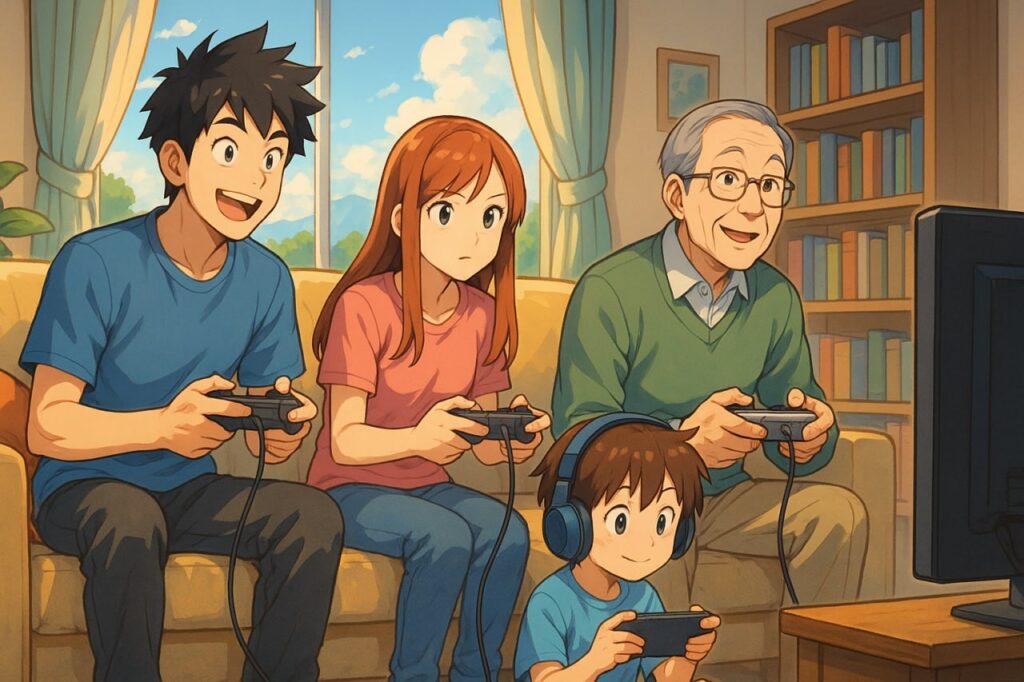
The average gamer today is 35–36 years old, compared to around 29 two decades ago. Children and teens under 18 now make up only 18–20% of the audience. Meanwhile, in the early 2000s, just 9% of players were over 50—by 2024, that share had risen to 29%.
This reflects an important social shift: gaming has matured alongside its first generation. Many who started playing in the 1980s–90s are still playing as adults. At the same time, younger generations who grew up with gadgets only continue to expand the player base. As a result, games have become a cross-generational hobby. Demographically, gamers today essentially mirror the general population by age.
Gender Balance
The old stereotype that “video games are for boys” is outdated. In 1999, men made up about 80–85% of the audience. Today, women account for 43–47% of all gamers worldwide.
This shift is largely driven by mobile and casual games, which drew in huge numbers of women players. By the mid-2000s, there were even studios fully focused on women 35+. Now, 74% of surveyed women who play games say they play casual games daily—once mostly on social networks, now primarily on mobile.
Of course, some differences remain (shooters and consoles skew male, puzzles skew female). But overall, gaming has become almost gender-balanced, marking an important cultural change: women now participate in gaming culture on equal footing with men.
Social Stratification
In the 1990s, games were seen as a pastime for teenagers and slackers. Today, players are found across all social strata, including the wealthiest and most educated.
In the U.S., studies show that adults with higher incomes and full-time jobs play just as often as others—and spend just as much money on games. In fact, the share of working adults with above-average incomes is higher among gamers than in the general population. Gaming has normalized culturally, becoming a common hobby even among professionals.
On the other hand, free mobile games have made gaming accessible to people with low incomes worldwide. With smartphones now everywhere, even those who would never buy an expensive console or gaming PC can play. In short: today’s gamer profile is highly diverse—from school kids and the homeless to top managers.
Games and Unemployment
During economic crises, video games often serve as an affordable escape. For example, during the 2008 global financial crisis, the gaming industry was described as “recession-proof,” with sales remaining strong despite falling incomes. During the COVID-19 pandemic (2020), games experienced another boom as people stuck at home turned to virtual worlds.
But there’s also a flip side. Studies in the U.S. found that improvements in video game quality in the 2000s contributed to lower workforce participation among young men. Some unemployed young adults chose to spend their time gaming instead of job hunting—finding enough satisfaction in games to live with their parents.
● Between 2000 and 2015, average annual working hours for men aged 21–30 fell by 12%, and up to 79% of that decline was attributed to gaming.
● By 2015, 15% of men aged 21–30 in the U.S. were neither working nor studying, spending on average 520 hours a year on computers—60% of that time in games.
Interestingly, many of these non-working gamers reported being perfectly happy. For some, video games became a substitute for real-world achievement.
At the same time, periods of unemployment often lead to increased gaming as a way to pass time and cope with stress.
In short, the relationship between gaming and employment is complex: on the one hand, gaming skills create new professions (esports, streaming). On the other, heavy gaming can distract some young people from entering the workforce. But maybe that’s a good thing—and maybe it’s our salvation.
Platform Revolution
In 2000, access to games was primarily through stationary platforms — home consoles and personal computers, which limited the audience mainly to households with disposable income (and patient parents). Now, almost everyone has a smartphone, and mobile devices have become the dominant way to play for most people. In 2024, the number of mobile gamers reached ~2.85 billion people, representing the majority (~85%) of all gamers. For comparison: ~908 million people play on PC, ~630 million on consoles. Many, of course, play across multiple platforms.
While mobile games in the 2000s were a technological novelty with simple “Snake” games, by the 2020s mobile gaming had transformed into a massive segment generating nearly half of all industry revenue. The accessibility of smartphones and free games meant that video games were no longer a privilege — now they’re played everywhere. This shift radically expanded the social composition of players: people of all ages, professions, and income levels joined gaming, including those who never bought a console or PC. Your grandma plays Homescapes? That’s the norm now!
Genre Preferences
With audience growth came changes in popular game genres, reflecting the diverse tastes of new players. In the late ’90s and early 2000s, the hits were relatively hardcore games aimed at enthusiastic youth: console platformers and fighting games, PC shooters, strategies, and RPGs. Now the world’s most popular genre is casual games, played by about 63% of all gamers. Match-3 has conquered the world!
However, this doesn’t mean hardcore games have lost significance. Millions of people are passionate about action games, adventures, shooters, RPGs, strategies, sports simulators — virtually all major genres have huge fan bases. Among hardcore gamers (those who play regularly and for extended periods) in the US, ~30% name shooters as their favorite genre, while ~41% prefer action-adventures.
Socio-Demographic Differences
Preferences largely depend on age and culture. Younger generations (Zoomers and Alphas) lean toward dynamic games: shooters, action games, battle royales, as well as creative sandboxes like Minecraft.
In contrast, older generations (Boomers and Gen X) more often choose calmer games: card games, logic puzzles, board game adaptations, or single-player games. Surveys show that over half of older gamers prefer puzzle games for relaxation.
Gender also plays a role: the audience for military shooters and MOBAs is still mostly male (though women are crushing it there too), while match-3 genres or farming simulators are almost equally popular among women.
Regional tastes also emerge: strategies and MMOs are extremely popular in East Asia (Koreans in StarCraft are a universe unto themselves), while shooters and sports games (football, basketball) dominate in North America and Europe. Russia, the Middle East, and Latin America traditionally favor shooters and action games, while Japan has its own culture of RPGs and mobile gacha games (where you can spend your paycheck on a virtual waifu).
Nevertheless, thanks to globalization, hit titles become popular everywhere. If 25 years ago gaming preferences varied significantly by country (for example, Japanese gamers played JRPGs on consoles while Americans played first-person shooters on PC), now there’s a convergence of tastes: successful genres are present in all markets, adapting to local characteristics. We’ll discuss regional differences in more detail later.
Time and Gaming Format
In 2000, a gaming session usually meant half an hour to an hour in the evening in front of a TV or computer (with constant parental grumbling: “stop playing, go outside”). Now, thanks to mobile devices, the concept of “snack gaming” emerged — short gaming sessions during breaks. Though due to normalization of this process by 2025, the term has already fallen out of use — now it’s just “gaming.” Mobile players launch games almost daily in short 5-10 minute bursts, for example, while commuting or waiting in line. The average mobile gamer opens a gaming app ~4 times a day.
Meanwhile, PC and console gamers tend to play less frequently (about 3 days a week), but in longer 1-2 hour sessions. Or 8 hours on weekends. 😁
On average worldwide, a typical player spends about 7-8 hours per week gaming, which is only slightly less than many people’s TV watching time. Except games require active participation, not passive consumption.
Thus, games have firmly integrated into daily routines: some play a little but often, others less frequently but in binges. This format flexibility — from 5 minutes in Candy Crush to years-long grinding in EVE Online — has allowed different people to find their place in gaming as a hobby.
Games Are Now Mainstream
In the ’90s, gaming as a hobby was often stigmatized: first games were blamed for developing laziness and antisocial behavior, then accused of fostering aggression. It’s now been proven many times over that people were confusing correlation with causation, and public perception has changed. Most adults consider games a normal pastime but don’t consider themselves gamers (classic). According to surveys, 74% of players in the US play with others (online or locally), with 55% doing so every week.
Games with user-generated content appeared. Combined with online development, this transformed games into a form of communication and self-expression.
Games have become a social activity for friends and families: over half of gaming parents regularly join their children’s games, viewing it as a way to spend time as a family.
Player Motivation
About 80% of gamers cite playing to relax and relieve stress as their main motivation (yes, even in soulslikes). Other popular motivations include immersion in an interesting story or fictional world (~53% of players value escapism) and a sense of progress (~43% play for goals and skill improvement). Competition is important for many, especially among youth — games provide an opportunity to test skills and face challenges. And of course, social interaction: a significant portion of players game to connect with friends or meet new people online.
Clans, guilds, joint raids — all of this strengthens bonds. Different groups emphasize different motives (for example, young men value competition while older players value relaxation), but overall video games satisfy a whole spectrum of emotional and social needs.
Streaming and Esports
Watching games has become almost as common as playing them. According to Newzoo, about 64% of all internet users worldwide watch gaming video content — streams on Twitch/YouTube, let’s play recordings, or esports tournaments. In Asia and the Middle East, the total audience of gaming stream viewers exceeds 1 billion people!
Esports has become a multi-billion dollar industry. This means games are not just an individual activity but a mass spectacle that people feel part of. Youth absorbs gaming culture the same way previous generations grew up on television and movies. Gaming vocabulary, memes, virtual events (like concerts inside games) — all of this has become an element of modern culture.
Moreover, starting in the mid-2000s, gamification has penetrated other spheres: from educational apps to corporate training. Gaming tropes have infiltrated other art forms, the litRPG genre managed to become trendy and fade out.
Regional Characteristics
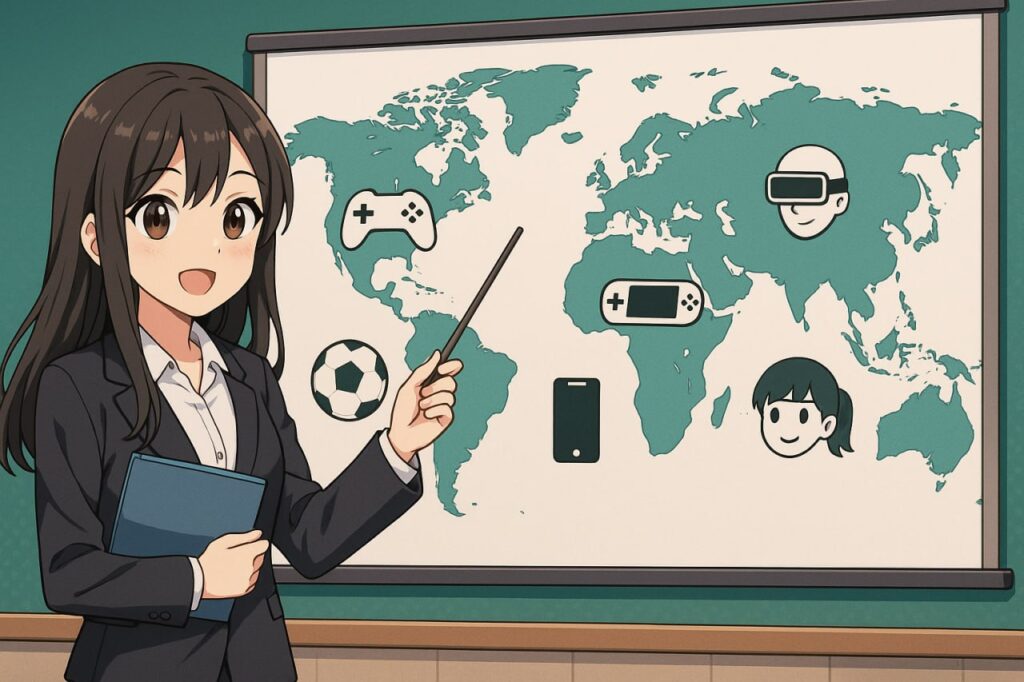
Social changes manifest differently across regions. Demographics, economics, culture, and infrastructure shape unique gaming audiences in each region.
North America
USA and Canada: ~285 million players, but generate half of the entire industry’s revenue. Average gamer is an adult (~36 years old), been playing for 14 years. Prefer high-budget PC and console games. USA is the birthplace of esports and major gaming companies.
Won’t dwell on this long — we make games primarily for this market anyway.
Latin America
Over 25 years transformed from periphery to one of the fastest-growing segments: ~420 million players. Thanks to cheap smartphones and mobile internet. Young audience under 35-40, gender balance close to equal.
Love competitive games and esports. Brazil in top 3 by number of pro players. Free Fire is a cult mobile shooter. Football (FIFA/eFootball) is an annual bestseller. Regional revenue <$10 billion with player count similar to Europe.
Europe
~408 million players, demographics like North America. Western Europe prefers consoles (PlayStation, Nintendo), Central and Eastern prefer PC. Mobile segment growing, but Europeans prefer deep experiences on PC/consoles.
EU alone brings in ~€23.3 billion. They regulate loot boxes and age ratings, but generally support the industry with grants (especially Germany and Scandinavia).
Africa
~349 million players, 304 million of them mobile. Young audience under 30. Popular genres: simple puzzles, quizzes, light action games. Gaming is a window to the world and earning opportunity through streaming. Market only $1.8 billion.
Middle East (MENA)
~168 million players. Very young societies (median age 20-30) + hot climate = gaming as main leisure activity. In some countries >90% of internet users game.
Mobile gaming dominates. Rich Gulf states also popular for consoles and PC. Love competitive games. Huge gap between rich countries (high ARPU) and poor ones (mobile offline only).
Southeast Asia and Oceania
450-500 million players. Philippines holds the record: 97% of internet users game. Absolute mobile gaming domination due to lack of money for PC/consoles.
Oceania (Australia, New Zealand) closer to Europe/USA: 67% of population games, love consoles.
East Asia — Center of the Global Industry
China: 681 million players — largest pool on the planet. In 25 years went from zero to #1 by revenue. Average age ~30, 65% male. Prefer mobile and PC online games. Consoles were banned from 2000 to 2015. Strict limits for kids: maximum 3 hours of gaming per week.
South Korea: ~34 million players (65% of population). Esports is a national sport. PC cafes are a cultural phenomenon. Gender balance 60/40 favoring men.
Japan: 74 million players, many middle-aged and older (still playing at 40-50 if they started with Famicom). Birthplace of Nintendo and Sony. Historically prefer consoles, since 2010s — mobile games. Created the gacha game phenomenon.
Forecasts to 2050
Audience Growth
The global gaming audience will almost certainly continue growing, though growth rates depend on market saturation and technological breakthroughs. By 2030, the number of players could reach ~4.2 billion. By 2050, when Earth’s population is projected at around 9.7 billion, gamers could exceed 6 billion. By then, games will have become a universal phenomenon across all population groups, like television in the past. Significant contributions will come from regions where demographics and improving prosperity create new waves of players:
● Africa will nearly double its population (to ~2.5 billion) and remain the youngest continent (median age ~25). This shift will make the gaming audience more southern and youth-oriented.
● Asia will remain the largest region by player count, though its share of world population will drop to ~55%. China’s, Korea’s, and Japan’s populations will continue declining, but Indonesia, the Philippines, and Pakistan are growing. So Asia will likely maintain ~50%+ of all global gamers.
● Europe and North America are markets approaching saturation by player count. Europe’s population will even shrink by 2050 (from ~744 million to ~703 million), while North America will grow slightly (from 382 million to 425 million) through migration. In absolute numbers, gamers in these regions will grow slightly due to elderly players.
So the standard set of English, German, French, Spanish, Italian, and Portuguese will apparently need expansion to at least include Arabic and Hindi.
Generational Changes
Population aging in developed countries and global life expectancy increases mean the average gamer age will continue rising with humanity’s median age: by 2050, the world’s median age will rise from 31 to ~36. By 2050, today’s 40-year-olds will be retirees, and many will keep their gaming hobby. This means a qualitative audience shift: video games will no longer be associated with youth at all. By 2050, the average active player might be around 40 years old.
The industry will face the task of adapting content and devices for age-related needs. We can forecast growth in niche segments like games for the elderly, wellness games, simplified interfaces accounting for poor vision or motor skills.
On the other hand, Generations Alpha and Beta will grow up in a world where games and reality are increasingly merged (through AR, VR, metaverses). Their relationship with games will be even more natural than millennials’. They’ll become the new largest consumer cohort. Already, children spend more time in game-platforms like Roblox, Minecraft, Fortnite Creative — proto-metaverses where boundaries between gaming, socializing, and creating blur. By the 2040s, this could become the dominant format for youth: gaming metaverses where people play, socialize, and create content. VR could become sufficiently mainstream if devices become as cheap and convenient as smartphones. Then future 25-year-olds in 2050 might spend time in virtual game worlds as routinely as current ones do in social media or messengers.
Another generational change — gender balance will finally equalize, and the stereotype “games aren’t for girls” will disappear even in conservative societies. We can expect women’s share among gamers to globally hold at ~45-50%, and in some regions (Europe, North America) possibly exceed 50%, since women live longer and will outnumber men among elderly players.
Dominance of Mobile and Flexible Formats
Smartphones or their future equivalents (possibly wearable AR devices, smart lenses, etc.) will likely remain the primary gaming platform. So casual games of all stripes will maintain the widest coverage (at least half of players will play them). Casual genres might evolve thanks to AI — smarter puzzles and personalized mini-games tailored to user interests could appear.
Consoles and PCs won’t disappear but will become relatively niche in user count. The PC audience will likely age more than other platforms.
An important trend is cloud gaming: it will let people with any device play high-quality games. If streaming technologies and telecom develop sufficiently, by the 2050s even cheap devices in developing countries could run demanding games via the cloud. This could reduce the access gap between rich and poor players and expand audience preferences in regions currently limited to casual games.
Overall, the future is platform convergence: people will play on whatever’s at hand, whether phone, tablet, TV screen, or VR headset, with instant switching capability. Platform exclusives will nearly disappear; every game will be developed with cross-platform in mind from the start.
New Platforms
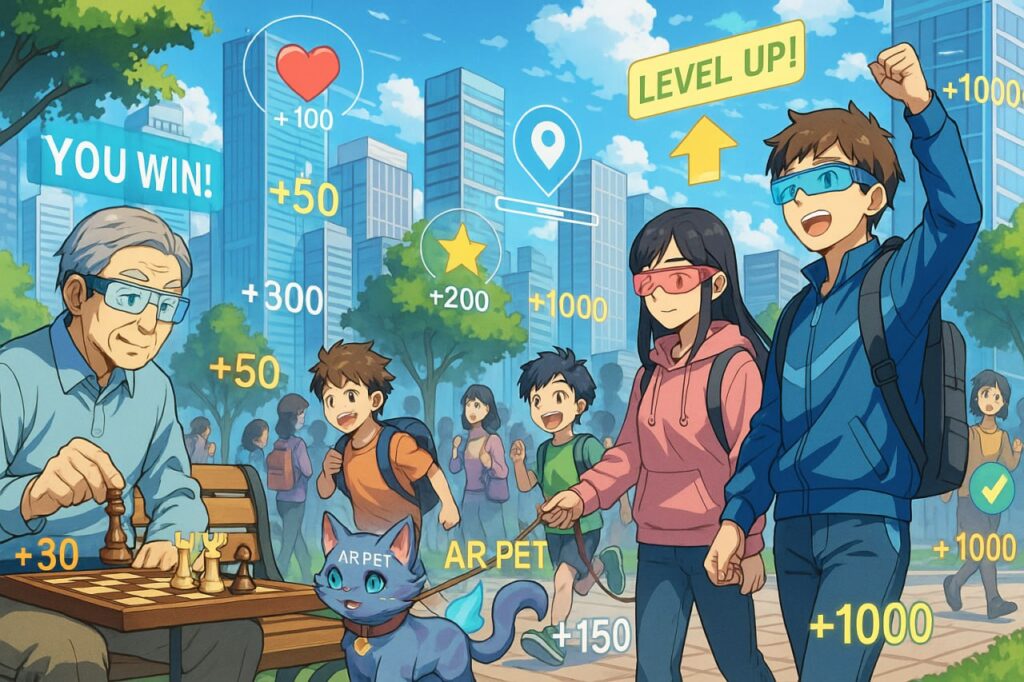
If VR becomes sufficiently comfortable, by 2040 a notable audience segment could form (including elderly who can’t travel physically) preferring virtual worlds. AR games could also become popular, especially among urban youth. However, these platforms will likely supplement rather than replace traditional ones — unlikely to exceed 10-20% of total gaming time by 2050 without a technological breakthrough.
First commercial neural interfaces might appear, but while they require invasive procedures, we shouldn’t expect widespread adoption. With a breakthrough, we’d get a whole layer of players realizing themselves in virtual worlds.
Genre Evolution
Given demographics, expect bipolarity: youth gravitates toward competitive games, older players toward calm ones. Shooters and MOBAs will remain popular among teens and 20-somethings. Esports will grow — by 2050, tournaments might draw audiences comparable to the Olympics. Fortnite-like games could become the new soccer.
Simultaneously, casual and social games will expand mature audience reach: cooperative puzzles for families, interactive stories for adults. Puzzles and card games will strengthen positions among older generations.
By 2050, boundaries between social media and games will blur. The “metaverse” will materialize — virtual spaces for socializing, working, and gaming simultaneously. New genres will open: city planning simulators as urbanist tools, historical VR games in education. Gamification will penetrate everywhere — healthy lifestyle choices will earn points like in games.
Cultural Diversity
Currently the industry is concentrated in the USA, Japan, China. By 2050, when most players will be from Africa, Asia, Latin America, demand for local content will grow. We’ll see flourishing African studios, popular IPs from the Arab world, adaptation to local preferences (cricket for South Asia, local folklore). Games will become global with local flavor.
Gaming Expenses
Growing global prosperity will enable more people to spend on entertainment. Middle class expansion in Asia and Africa will increase the paid games market where free-to-play currently dominates. As incomes rise in India or Nigeria, a console player base for AAA games will form.
However, with unemployment rising due to automation, youth will turn to free games. The industry will continue monetization through micropayments and subscriptions. Gaming subscriptions could become the primary consumption method — direct purchase options might disappear.
Unemployment and Free Time
Increased free time from robotization or unemployment will increase gaming time. Video games are recession-resistant — people will sooner give up expensive vacations than cheap games. If demand for human labor decreases, games could become work or self-realization through esports, content creation, streaming, modding.
Government Regulation
Expect increased regulation: more censorship, monetization restrictions. Conversely, recognizing games as an important industry will lead to government support. Ideally, games will become part of educational programs, expanding the audience to all students.
In 25 years, drawing a line between gaming and non-gaming activity will be difficult. AI, graphics, and interface development will make games more realistic. The future gaming audience is essentially the entire population, continuously playing digital life.
P.S. This article is a compilation of original posts from the Telegram channel https://t.me/GameGestalt_En